Friday, June 11, 2010

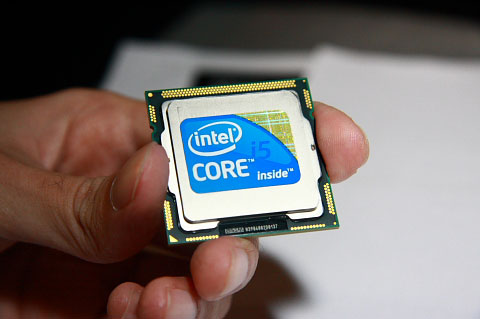
Difference betweem corei5 and i7


The Core i5 processor from Intel is a scaled down version of the high performance but highly priced i7 processors. The lower corresponding price of the i5 makes it accessible to the mainstream market. The most noticeable difference between the two is the shift in the socket type being used. The i5 uses the LGA1156 socket along with a new chip set. Although it is expected that the i7 would also move to the same socket, most of the existent i7 processors use the LGA1366 socket type and its corresponding chip set.

When it comes to memory, the i5 uses the more traditional dual channel memory. Dual channel improves the speed of the system by providing an individual channel for two identical memory modules. The i7 uses triple channel memory which means that you need to buy memory in sets of three in order to take advantage of its full potential. This can be quite costly, especially if you use expensive brands of memory. But when it comes to the performance, triple channel memory is considerably superior compared to dual channel.


The i7 is also a lot more superior compared to the i5 when it comes to hyper-threading. The system sees an i5 quad core processor as having four cores, which is quite reasonable. When it comes to the i7, the system sees eight cores instead of the actual four. This seemingly minor difference does not really do anything to improve the speed of the most common computer activities like browsing and doing paperwork. But when it comes to heavy load applications like 3d rendering that can benefit a lot from multi-threading, the speed improvement is fairly noticeable.

To sum it up, the i7 is a very expensive processor that entails extra cost due to the expensive complimenting hardware like the motherboard and memory. The i7 is best for workstations and for people who routinely do heavy computing. For the rest of us, the i5 has more than enough power to suffice. The lower cost and greater flexibility in terms of the hardware also makes it easier for people to customize their rig.

Summary:
1.The i5 is the mainstream version of the high-end i7.
2.The i5 uses the LGA1156 socket while the i7 uses the LGA1366 socket.
3.The i5 uses dual channel memory while the i7 uses triple channel memory.
4.Hyper Threading on the i7 is better than on the i5.

About the 2010 Intel® Core™ i3 Processor


The wait is over—now everyone can move up to smart performance. As the first level in Intel’s new processor family, the 2010 Intel® Core™ i3 processor is the perfect entry point for a fast, responsive PC experience.

Smart style starts here
Get the smart performance you need without compromising the stylish looks you want, thanks to an ultra-thin laptop powered by the 2010 Intel® Core™ i3 processor, featuring enhanced battery life and sleek design.

Intel® Hyper-Threading Technology?1
Enables each core of your processor to work on two tasks at the same time, delivering the performance you need for smart multitasking. Don't let too many open applications slow you and your PC down. Get smart performance now.

Intel® HD Graphics
Intel® HD Graphics provides superb visual performance for sharper images, richer color, and life-like audio and video.?2 Watch movies and Internet videos in high-definition, play popular game titles and get full support for Microsoft Windows* 7. It's all built in; no need for an extra add-in video card.

Connect in More Places
Access to the Internet is increasingly important, no matter where you are. When you're on the move, pairing Intel®-powered devices with wireless broadband and a tiny USB modem from your service provider enables you to connect to high-speed Internet service just about anywhereS without depending on WiFi hotspots. Look for embedded WiMAX capability when you’re shopping for your next PC.

Intel Dual Core Processors

Intel Dual Core Processors are just launched striped down version of Core 2 Duos.. there are 2 in Market for Desktop range, E2140 runs at 1.6 GHz with 1 MB L2 and 800 MHz FSB and E2160 with 1.8 GHz with same specs of E2140…. these are not Pentium D rather they are same batch like Core 2 Duo based on the new Core Technology

What is clock speed???????


Just like a stopwatch, clock speed measures how fast a processor performs an activity – which activity depends upon how you plan to use your computer. Clock speed rates are shown in gigahertz (GHz), which means a billion cycles per second.

What is cache memory


Cache is a fast storage area where the processor places frequently accessed data. Smart Cache is Intel’s performance-maximized data storage. It allows each processor core to dynamically utilize up to 100% of available cache and obtain data from the cache at higher throughput rates. By keeping more data closer to the processor for fast execution, overall performance is improved. This is of particular benefit when running rich media titles and games, as well as everyday productivity applications

Difference Dual Core vs Core 2 Duo


Dual core processors are those that contain 2 cores in a single silicon chip while Core 2 Duo is the name given by Intel to its second batch of dual core processors.


The processor wars have hit a major speed bump as clock speeds become harder and harder to push upwards. Because the number of transistors in a single chip continues to follow its upward trend, processor manufacturers like Intel and AMD have decided to go a different route in increasing the performance of their products, adding more cores into a single chip that leads to a performance boost if the OS supports it. Two or more cores can greatly aid in multi-tasking where each core can work independently of each other. All processors that have 2 cores in them are collectively called as dual core processors regardless of which manufacturer it came from, while those that have 4 processors in a single chip are called quad core.

Initially, Intel called their dual core processors as Core Duo, a very obvious reference to two cores, while AMD called theirs the X2. Intel’s dual core processors were simply 2 Pentium 3 processors that were fabricated in a single chip. As they refined their product more, they decided to differentiate their second set of processors from the Core Duo and decided to call it Core 2 Duo.

Basically, the difference between dual core processors and the Core 2 Duo processors is just in the semantics as Core 2 Duo is simply a name given to a more recent family of dual core processors. If we translate this to the single core processors, we can say that Core Duo is Pentium 1 while Core 2 Duo is Pentium 2, while AMD has their own processors with different names; but all these are still single core processors. We can therefore say that Core 2 Duo is simply a subset of all the dual core processors that are out in the market today.

Summary:
1. Dual core is the generic name given to processors that have 2 cores on the same chip
2. Core 2 Duo is the second line of dual core processors from Intel
3. Other dual core processors aside from Core 2 Duo are the Core Duo from Intel and the X2 series from AMD
4. All Core 2 Duo processors are dual core but not all dual core processors are Core 2 Duo

What is a processor ?????????????

The Central Processing Unit (CPU) or the processoris the portion of a computer system that carries out the instructions of a computer program, and is the primary element carrying out the computer's functions. This term has been in use in the computer industry at least since the early 1960s [1]. The form, design and implementation of CPUs have changed dramatically since the earliest examples, but their fundamental operation remains much the same.

Early CPUs were custom-designed as a part of a larger, sometimes one-of-a-kind, computer. However, this costly method of designing custom CPUs for a particular application has largely given way to the development of mass-produced processors that are made for one or many purposes. This standardization trend generally began in the era of discrete transistor mainframes and minicomputersand has rapidly accelerated with the popularization of the integrated circuit (IC). The IC has allowed increasingly complex CPUs to be designed and manufactured to tolerances on the order ofnanometers. Both the miniaturization and standardization of CPUs have increased the presence of these digital devices in modern life far beyond the limited application of dedicated computing machines. Modern microprocessors appear in everything from automobiles to cell phones and children's toys.